⚡ Mythology · 12 Questions
Greek Gods Quiz: Can You Name All 12 Olympians?
Zeus, Poseidon, Athena, Apollo... do you truly know your Greek gods? Take this quiz and find out where you rank among mythology lovers.
Greek Gods Quiz — 12 Questions
This quiz covers all 12 Olympian gods of ancient Greek mythology: their powers, symbols, attributes, and relationships. Each question has four options and a detailed explanation so you learn something new even when you answer correctly.
Ready? Let's see how well you know Mount Olympus.
The 12 Olympian Gods: Quick Reference Guide
Before reviewing your answers, here's a complete guide to all twelve Olympians — their domains, symbols, and what made each one unique in ancient Greek religion and culture.
Zeus
King of the gods, sky & thunder
Symbols: Eagle, thunderbolt, oak
Hera
Queen of the gods, marriage
Symbols: Peacock, pomegranate, crown
Poseidon
God of the sea & earthquakes
Symbols: Trident, horse, dolphin
Demeter
Goddess of harvest & grain
Symbols: Wheat, cornucopia, torch
Athena
Goddess of wisdom & strategy
Symbols: Owl, olive tree, spear
Apollo
God of sun, music & prophecy
Symbols: Lyre, laurel, bow
Artemis
Goddess of hunt & the moon
Symbols: Bow, deer, crescent moon
Ares
God of war & violence
Symbols: Spear, helmet, vulture
Aphrodite
Goddess of love & beauty
Symbols: Dove, rose, myrtle
Hephaestus
God of fire & craftsmanship
Symbols: Hammer, anvil, fire
Hermes
Messenger god, trade & travel
Symbols: Caduceus, winged sandals
Dionysus
God of wine & theater
Symbols: Grapevine, thyrsus, ivy
Greek Mythology: Why It Still Matters
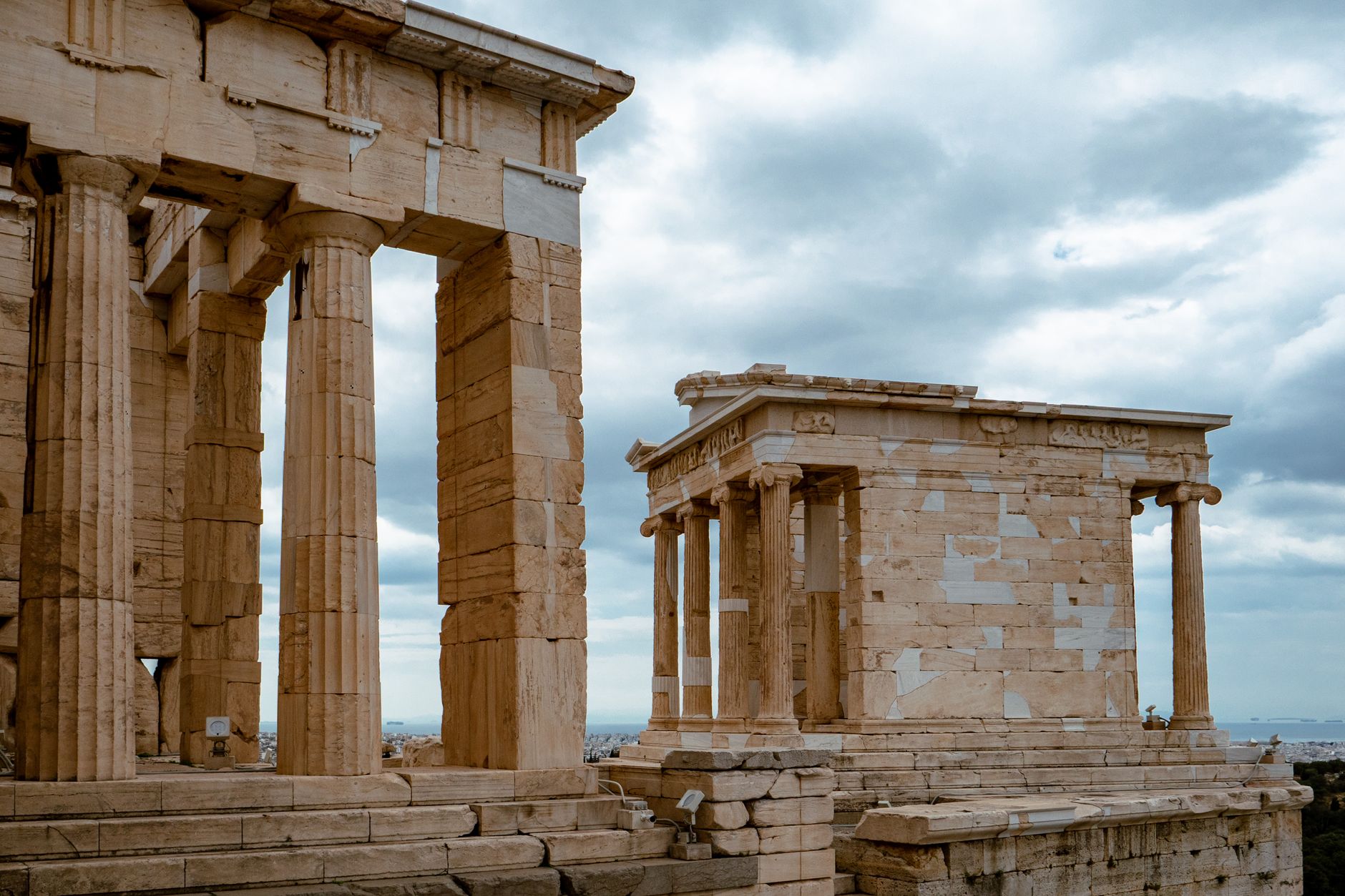
Greek mythology has shaped Western culture for over 2,500 years. The stories of the Olympian gods influenced art, literature, philosophy, astronomy (planetary names), and even modern psychology (Oedipus complex, Narcissism, Psyche). Understanding the Greek gods means understanding a huge portion of Western cultural heritage.
The Three Realms of Greek Cosmology
The ancient Greeks divided the universe into three main realms, each ruled by one of Zeus's brothers:
- Mount Olympus (the sky): Ruled by Zeus. Home of the Olympian gods and the meeting place of divine councils.
- The Sea: Ruled by Poseidon. Encompassed all waters, including seas, rivers, and the ocean encircling the world.
- The Underworld: Ruled by Hades. The realm of the dead, divided into Elysium (paradise), Asphodel Meadows (neutrality), and Tartarus (punishment).
How the Olympians Came to Power
Before the Olympians, the world was ruled by the Titans — primordial beings led by Cronus. When Cronus learned that one of his children would overthrow him, he swallowed each child at birth. Zeus, hidden by his mother Rhea, survived and later forced Cronus to regurgitate his siblings: Hestia, Demeter, Hera, Hades, and Poseidon.
The ensuing Titanomachy (war between Titans and Olympians) lasted ten years. The Olympians, aided by the Cyclopes who forged Zeus's thunderbolts, ultimately defeated the Titans and imprisoned them in Tartarus.
Greek Gods vs Roman Gods: Key Differences
| Greek Name | Roman Name | Domain |
|---|
| Zeus | Jupiter | Sky, thunder, king of gods |
| Poseidon | Neptune | Sea, earthquakes |
| Hades | Pluto | Underworld, dead |
| Athena | Minerva | Wisdom, warfare strategy |
| Ares | Mars | War, violence |
| Aphrodite | Venus | Love, beauty |
| Apollo | Apollo | Sun, music, prophecy |
| Artemis | Diana | Hunt, moon, chastity |
| Hermes | Mercury | Messenger, trade, travel |
| Hephaestus | Vulcan | Fire, smithing |
| Demeter | Ceres | Harvest, grain |
| Dionysus | Bacchus | Wine, theater, ecstasy |
Frequently Asked Questions
Who are the 12 Olympian gods?
The 12 Olympians are: Zeus (king), Hera (queen), Poseidon (sea), Demeter (harvest), Athena (wisdom), Apollo (sun/music), Artemis (hunt/moon), Ares (war), Aphrodite (love), Hephaestus (fire/crafts), Hermes (messenger), and Dionysus (wine). Some lists substitute Hestia for Dionysus.
Who is the most powerful Greek god?
Zeus is considered the most powerful of the Olympian gods. As king of the gods and ruler of Mount Olympus, he controls thunder and lightning. However, each god has absolute power over their own domain.
What is the difference between Greek and Roman gods?
Most Greek gods have Roman equivalents with different names but similar attributes: Zeus/Jupiter, Poseidon/Neptune, Athena/Minerva, Ares/Mars, Aphrodite/Venus. The Romans adopted Greek mythology and adapted it to their own religious and cultural context.
How many questions does this Greek Gods Quiz have?
This Greek Gods Quiz has 12 questions covering all major Olympian gods, their attributes, symbols, and myths. Each question includes a detailed explanation of the correct answer to help you learn.
Who was the god of the underworld in Greek mythology?
Hades was the ruler of the Greek Underworld. He is the brother of Zeus and Poseidon. His wife Persephone, daughter of Demeter, was abducted to become queen of the underworld — this myth explains the origin of the seasons.
