🏛️ Roman Empire Trivia Quiz
From the legendary founding of Rome in 753 BC to the dramatic fall of the Western Empire in 476 AD, the Romans built one of history's greatest civilizations. This quiz tests your knowledge of Roman emperors, landmark events, iconic architecture, military might, and lasting cultural legacy. Think you can score a perfect 12? Ave Caesar!


Answers Explained
Q: Why is Augustus considered the first emperor rather than Julius Caesar?
A: Julius Caesar was a dictator of the Republic, not an emperor of an empire.
Although Julius Caesar held enormous power and is often seen as the bridge between the Republic and the Empire, he never formally became emperor. He held the title 'dictator perpetuo' (dictator in perpetuity) and was assassinated before he could consolidate hereditary rule. His adopted son Octavian defeated his rivals, received the honorific title 'Augustus' from the Senate in 27 BC, and established the structures of the imperial system that would last for centuries.
Q: How did Roman infrastructure shape the modern world?
A: Roman roads, aqueducts, and legal systems directly influenced modern civilization.
The Romans built over 400,000 km of roads, many of which formed the basis of modern European road networks. Their aqueducts delivered fresh water to cities across the empire — some still function today. Roman law became the foundation of most European legal systems, and the Latin language evolved into the Romance languages spoken by over 800 million people. The Roman calendar (reformed by Julius Caesar) is the basis of our modern Gregorian calendar.
Q: Was the fall of Rome really a sudden collapse?
A: No — it was a gradual transformation over centuries, not a single dramatic event.
Historians like Peter Heather and Bryan Ward-Perkins argue that Rome's fall was a complex process spanning 200+ years. The conventional date of 476 AD (when Odoacer deposed Romulus Augustulus) is somewhat arbitrary — the Eastern Roman Empire continued as the Byzantine Empire until 1453 AD. Many Roman institutions, laws, and the Christian Church survived and evolved, meaning Roman civilization was transformed rather than destroyed.
Frequently Asked Questions
When was the Roman Empire founded?
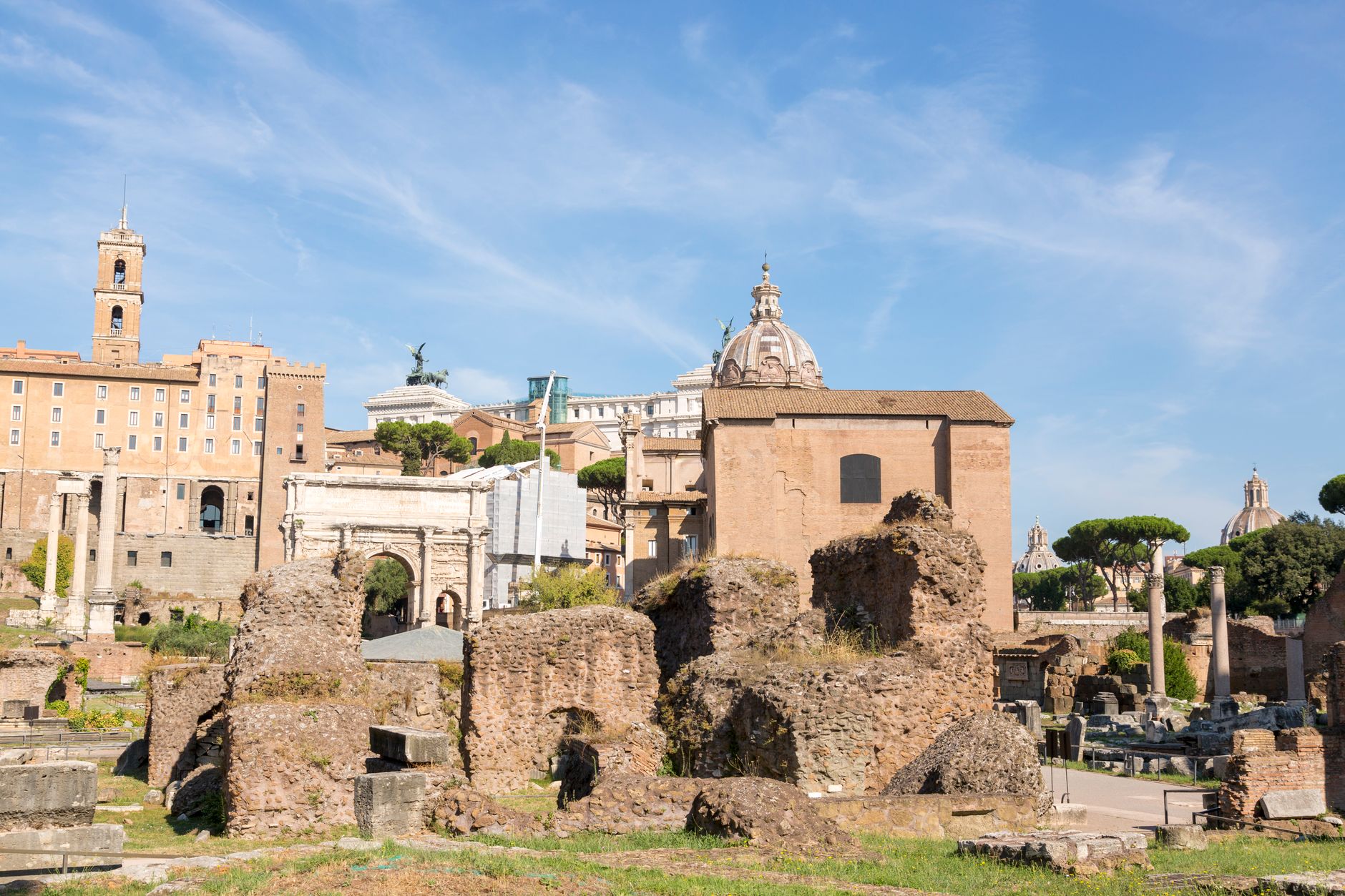
The Roman Empire is traditionally considered to have begun in 27 BC when Octavian received the title "Augustus" from the Roman Senate, becoming the first emperor. Before this, Rome had been a monarchy (753–509 BC) and then a republic (509–27 BC). The city of Rome itself was legendarily founded in 753 BC by Romulus.
Who was the greatest Roman emperor?
Historians frequently cite Augustus, Trajan, Hadrian, and Marcus Aurelius as among the greatest. Augustus built the foundations of the empire and presided over the Pax Romana; Trajan expanded Rome to its greatest territorial extent; Hadrian consolidated and fortified the frontiers; Marcus Aurelius is admired for his philosophical writings (Meditations) and his governance during difficult times.
Why did the Roman Empire fall?
The fall of the Western Roman Empire in 476 AD resulted from a combination of factors: military pressure from Germanic tribes (Visigoths, Vandals, Huns), economic troubles including inflation and overtaxation, political instability and civil wars, over-reliance on mercenary armies who lacked loyalty to Rome, and the gradual erosion of civic identity. The Eastern Roman Empire (Byzantine Empire) survived until 1453 AD.
What was the Roman Empire's largest territory?
The Roman Empire reached its greatest extent under Emperor Trajan around 117 AD, covering approximately 5 million km². It stretched from Britain (Britannia) in the northwest to Mesopotamia (modern Iraq) in the east, and from the Rhine-Danube frontier in northern Europe to Egypt and North Africa in the south, encompassing roughly 70 million people.
What language did Romans speak?
Romans spoke Latin, which evolved over centuries into the Romance languages: Italian, Spanish, French, Portuguese, Romanian, and others. Classical Latin remained the language of the Catholic Church, law, and scholarship for over a thousand years after Rome's fall. English also derives approximately 60% of its vocabulary from Latin, often via French after the Norman Conquest of 1066.