Free Ancient Greece Quiz — 12 Questions on the Classical World
This free Ancient Greece quiz covers more than 1,500 years of Greek civilization — from the first Olympic Games in 776 BC to the conquests of Alexander the Great. You'll be tested on Athenian democracy, Spartan society, legendary philosophers, decisive battles, and the architecture that still defines Western civilization.
Each question includes a detailed explanation after you answer, turning every wrong answer into a learning opportunity. Whether you're a student, a history buff, or just curious about the birthplace of democracy, this quiz will challenge and inform you. Ready to step into the Classical world?
Key Events of Ancient Greece: A Timeline
Ancient Greek civilization spanned well over a thousand years and produced ideas, art, and institutions that still shape the modern world. Here are the pivotal dates that defined the Classical world:
776 BC
First Olympic Games
Religious festival honoring Zeus
594 BC
Solon's Reforms
First steps toward Athenian democracy
508 BC
Cleisthenes' Reforms
Direct democracy established in Athens
490 BC
Battle of Marathon
Athens repels first Persian invasion
480 BC
Thermopylae & Salamis
Spartan stand and naval victory over Persia
447 BC
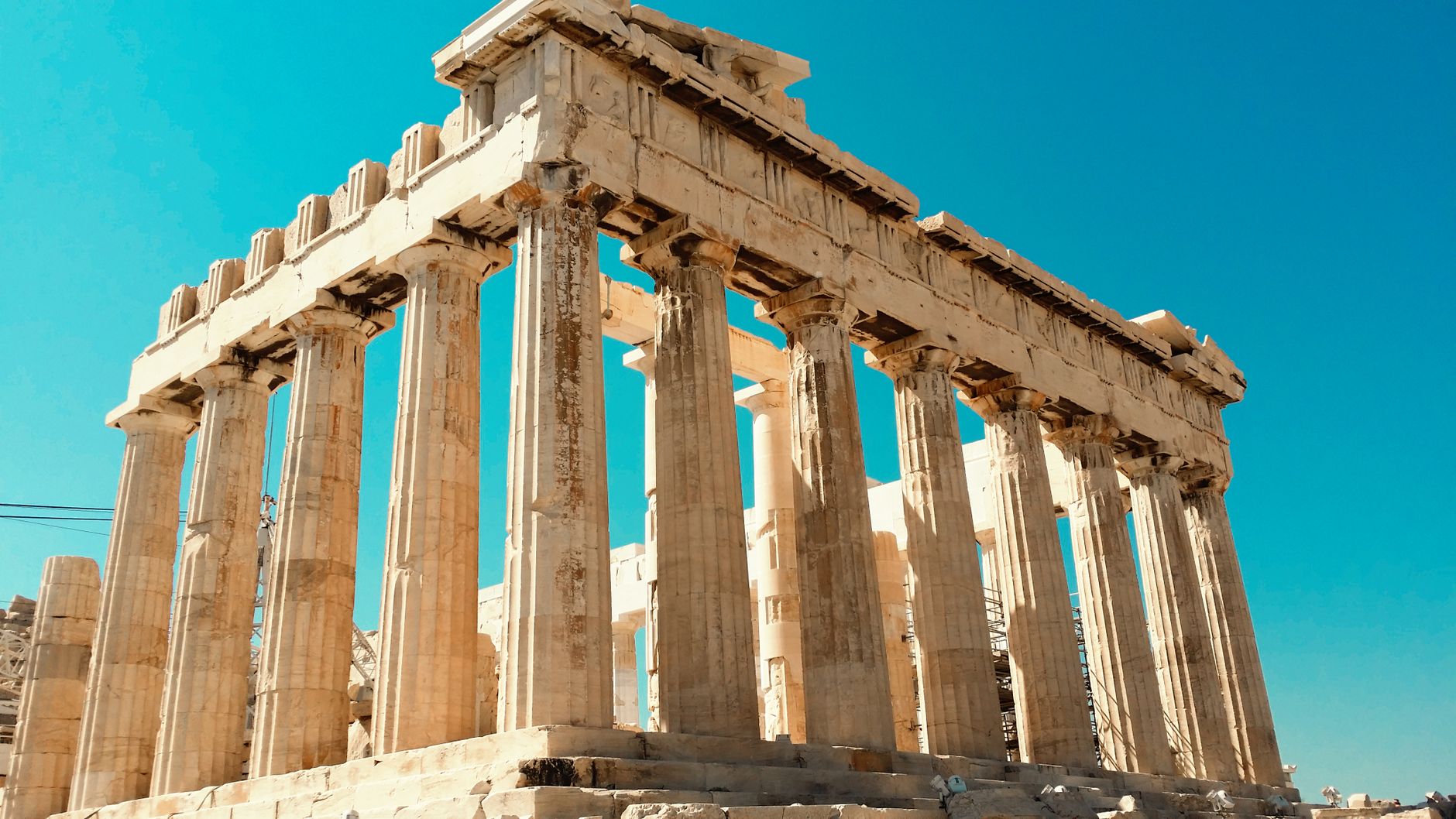
Parthenon Begun
Pericles' Golden Age of Athens
431 BC
Peloponnesian War Begins
Athens vs Sparta, 27-year conflict
399 BC
Death of Socrates
Executed for "corrupting the youth"
336 BC
Alexander Becomes King
Macedon's conquests begin
323 BC
Alexander's Death
Empire splits; Hellenistic era begins
146 BC
Rome Conquers Greece
Greek city-states fall to Roman rule
393 AD
Olympics Banned
Theodosius I ends pagan festivals
Democracy, Philosophy, and the Birth of Western Thought
Ancient Greece's most enduring legacy may be its ideas rather than its conquests. The Greeks pioneered systems of government and inquiry that still underpin modern institutions.
The Birth of Democracy in Athens
Athens did not become democratic overnight. Early reforms by Solon around 594 BC eased crushing debt laws and widened political participation. A century later, Cleisthenes reorganized Athenian society into ten tribes and created the Assembly, where every adult male citizen could speak and vote directly on laws — a radical experiment with no precedent in the ancient world. Women, enslaved people, and foreign residents were excluded, so Athenian democracy was far from universal by modern standards, but its core idea — that political power belongs to the citizens rather than a king or small elite — shaped nearly every democracy that followed.
The Great Philosophers
Three philosophers, teaching across roughly a century, laid the foundations of Western philosophy. Socrates (c. 470-399 BC) taught by relentless questioning, challenging Athenians to examine their own beliefs — a method still called the Socratic method. His student Plato founded the Academy and explored justice, truth, and the nature of reality through written dialogues. Plato's student Aristotle went on to tutor Alexander the Great and wrote foundational texts on logic, biology, ethics, and politics that were studied for nearly 2,000 years afterward.
Key Figures of the Classical World
| Figure | Role | Known For |
|---|
| Pericles | Athenian statesman | Led Athens' Golden Age; commissioned the Parthenon |
| Socrates | Philosopher | The Socratic method; executed in 399 BC |
| Leonidas I | Spartan king | Led the 300 at the Battle of Thermopylae |
| Herodotus | Historian | "Father of History," chronicled the Persian Wars |
| Alexander the Great | King of Macedon | Conquered the Persian Empire; spread Greek culture |
| Homer | Epic poet | Author of the Iliad and the Odyssey |
The Olympic Games, War, and Alexander's Empire
The Sacred Games at Olympia
Every four years, Greek city-states that were frequently at war with one another observed a sacred truce to allow the Ancient Olympic Games to take place at Olympia, starting in 776 BC. Events included sprinting, wrestling, boxing, the pentathlon, and the prestigious four-horse chariot race. Winners earned only a wreath of olive leaves, yet returned home as heroes, sometimes granted free meals and tax exemptions for life. The Games continued for nearly 12 centuries until Roman Emperor Theodosius I banned them in 393 AD.
Athens vs Sparta: The Peloponnesian War
After jointly repelling the Persian invasions in the early 5th century BC, Athens and Sparta turned on each other in the Peloponnesian War (431-404 BC), a brutal 27-year struggle for dominance over Greece. Sparta's eventual victory ended the Athenian Golden Age, drained the resources of every major city-state, and left Greece fatally weakened and divided — a vulnerability that neighboring Macedon would soon exploit.
Alexander the Great and the Hellenistic World
Macedon, a kingdom on Greece's northern frontier, rose rapidly under King Philip II and his son Alexander the Great, who became king in 336 BC at age 20. Over the next 13 years, Alexander conquered the entire Persian Empire and pushed as far as northwestern India, creating one of the largest empires in ancient history. Though his empire fractured immediately after his death in 323 BC, his conquests spread Greek language, art, and ideas across the Mediterranean and Middle East for centuries, a period historians call the Hellenistic era.
Frequently Asked Questions About Ancient Greece
When was Ancient Greece at its peak?
Ancient Greek civilization is usually dated from around 800 BC through 146 BC, when Greece fell under Roman control. Its cultural and political peak — the Classical period — ran roughly from 500 to 323 BC, covering the rise of Athenian democracy, the Persian Wars, the Golden Age of Pericles, and ending with the death of Alexander the Great.
What was the difference between Athens and Sparta?
Athens championed democracy, philosophy, theater, and naval power, with citizens voting directly on laws in the Assembly. Sparta was a militaristic society built around a professional warrior class, where boys began military training at age seven and the state prioritized discipline and conformity over individual achievement or the arts.
Who were the most important Ancient Greek philosophers?
The three most influential were Socrates, Plato, and Aristotle, who taught in succession across roughly a century. Socrates developed the Socratic method and was executed in 399 BC. His student Plato founded the Academy in Athens. Plato's student Aristotle tutored Alexander the Great and wrote foundational works on logic, biology, ethics, and politics.
Why did the Ancient Greeks hold the Olympic Games?
The Ancient Olympic Games, first held in 776 BC at Olympia, were a religious festival honoring Zeus. Every four years, warring Greek city-states observed a sacred truce so athletes and spectators could travel safely to compete. Winners received an olive wreath rather than money, though many returned home to great honors.
How did Alexander the Great change the Greek world?
Alexander the Great conquered the Persian Empire and built an empire stretching from Greece to northwestern India between 336 and 323 BC. His conquests spread Greek language, art, and culture across the Mediterranean and Middle East, launching the Hellenistic period and founding dozens of cities, including Alexandria in Egypt.