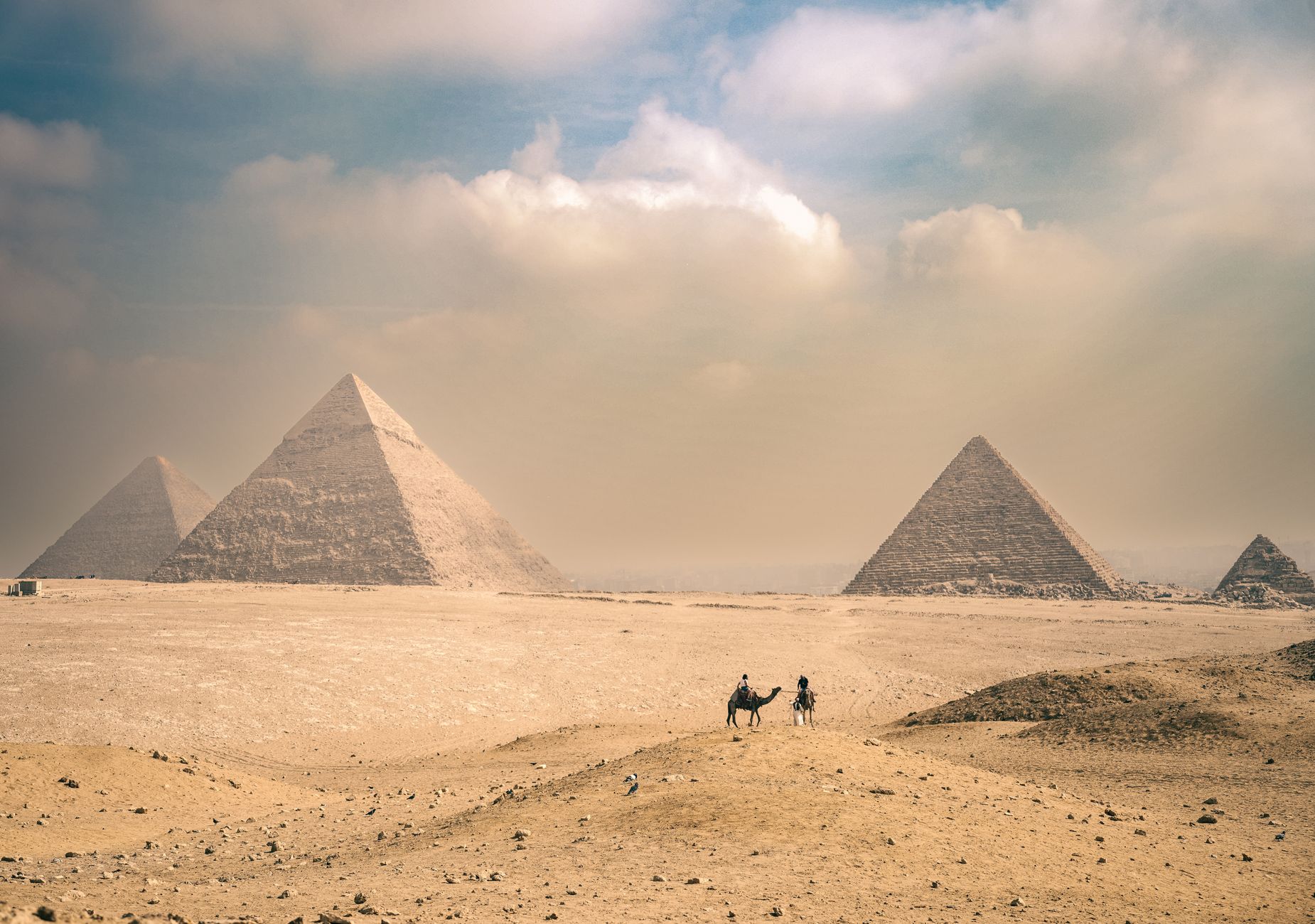
Ancient Egypt Quiz — 15 Questions to Test Your Knowledge of Pharaohs, Pyramids & Gods
Few civilizations capture the imagination quite like ancient Egypt. Nearly everyone knows the Great Pyramid and the Sphinx, but how much do you really know about the pharaohs who built them, the gods they worshipped, or the writing system that took nearly 2,000 years to decode? Was Tutankhamun a powerful ruler, or a minor pharaoh who just got lucky with an undisturbed tomb? Was Cleopatra actually Egyptian?
This ancient Egypt quiz covers 15 questions spanning over 3,000 years of history — from the Old Kingdom pyramid builders to the fall of the Ptolemaic dynasty. Each question comes with a detailed explanation, so whether you get it right or wrong, you'll walk away knowing something new about one of history's most fascinating civilizations.
No registration required. No timers. Just pure history knowledge — pick your answer and see how you stack up against the pharaohs.
Fun Facts About Ancient Egypt You Probably Didn't Know
Ancient Egyptian civilization lasted an astonishing 3,000 years — longer than the time separating us from Cleopatra. Along the way it produced some genuinely surprising facts that go far beyond pyramids and mummies:
😇 Cleopatra Lived Closer to the Moon Landing Than to the Pyramids
The Great Pyramid was built around 2560 BCE. Cleopatra VII was born around 69 BCE — meaning she lived closer in time to the 1969 Moon landing than to the construction of the pyramids she visited as tourist sites herself.
🐇 Cats Were Sacred — and Legally Protected
Killing a cat, even accidentally, could carry the death penalty in ancient Egypt. Cats were associated with the goddess Bastet, and families sometimes shaved their eyebrows in mourning when a household cat died.
💄 Workers Were Paid, Not Enslaved
Archaeological digs near the Giza pyramids uncovered worker villages, bakeries, and cemeteries showing that skilled laborers — not slaves — built the pyramids, receiving bread, beer, and medical care as part of organized labor gangs.
🕺 They Invented an Early Toothpaste
Egyptians created a tooth-cleaning powder from crushed rock salt, mint, dried iris flowers, and pepper — recorded in a papyrus dated to around the 4th century CE, among the earliest known toothpaste recipes.
👑 Pyramids Were Aligned With Stunning Precision
The Great Pyramid's sides are aligned to true north with an accuracy of within a fraction of a degree — a feat achieved without a compass, using careful astronomical observation of circumpolar stars.
📜 Egyptian Civilization Outlasted Most Others by Far
Ancient Egypt existed as a recognizable, continuous civilization for roughly 3,000 years, from unification around 3100 BCE to the Roman annexation in 30 BCE — far longer than the entire history of the United States, several times over.
Common Ancient Egypt Myths — Busted
Pop culture has spread a lot of misconceptions about ancient Egypt. Here are five of the most persistent myths, and what archaeology and history actually tell us:
- Myth: Slaves built the pyramids. Excavated worker villages, bakeries, and honorary burial sites near Giza show the pyramids were built by paid, organized crews of Egyptian laborers, not enslaved people.
- Myth: Cleopatra was ethnically Egyptian. Cleopatra VII belonged to the Ptolemaic dynasty, descended from Ptolemy I, a Macedonian Greek general. She is remembered as the first of her line to actually learn the Egyptian language.
- Myth: The pyramids must have been built with alien help. Detailed archaeological and engineering studies show the pyramids were achievable with ramps, levers, sledges, and a highly organized labor force — no outside intervention required.
- Myth: Only pharaohs were mummified. Mummification was practiced across social classes for those who could afford it, and even for sacred animals like cats, ibises, and crocodiles, millions of which have been found in animal necropolises.
- Myth: King Tutankhamun was one of Egypt's greatest, most powerful pharaohs. He was actually a minor ruler who took the throne as a child and died around age 19. His fame comes almost entirely from the fact that his tomb was found nearly untouched by looters.

Why Ancient Egypt Still Fascinates Us
Ancient Egyptian civilization is typically divided into three major eras — each with its own defining achievements:
The Old Kingdom: The Age of Pyramid Builders
Beginning around 2686 BCE, the Old Kingdom produced Egypt's most famous monuments, including the Step Pyramid of Djoser and the Great Pyramid of Giza. Pharaohs during this era were considered living gods with near-absolute authority over a highly centralized state.
The New Kingdom: Egypt's Golden Age of Empire
The New Kingdom (roughly 1550–1070 BCE) saw Egypt at its most powerful and wealthy, ruled by famous names like Hatshepsut, Akhenaten, Tutankhamun, and Ramesses II. Egypt expanded its territory, built massive temple complexes at Karnak and Luxor, and left behind some of the richest archaeological finds in history.
The Decline and the Ptolemaic Era
After centuries of internal division and foreign rule by Nubians, Persians, and Greeks, Egypt's independent pharaonic tradition effectively ended with the death of Cleopatra VII in 30 BCE, after which Egypt became a province of the Roman Empire — closing out roughly 3,000 years of continuous civilization.
Frequently Asked Questions About Ancient Egypt
Who really built the pyramids of Egypt?
Archaeological evidence — including worker villages and cemeteries found near Giza — shows the pyramids were built by paid, skilled Egyptian laborers, not slaves as popular myth suggests. Workers were organized into gangs, fed bread and beer as part of their wages, and received medical care, some even buried with honor near the pyramids they built.
How old are the pyramids of Giza?
The Great Pyramid of Giza was built around 2560 BCE, making it roughly 4,500 years old. To put that in perspective, Cleopatra VII (who lived around 30 BCE) was born closer in time to the Moon landing in 1969 than to the construction of the Great Pyramid.
Why did ancient Egyptians mummify bodies?
Egyptians believed a person's soul, or "ka," needed a preserved, recognizable body to continue existing in the afterlife. Mummification involved removing internal organs, drying the body with natron salt for about 40 days, and wrapping it carefully in layers of linen.
Who was the last pharaoh of ancient Egypt?
Cleopatra VII is generally considered the last active pharaoh of Egypt, ruling until her death in 30 BCE, after which Egypt became a province of the Roman Empire. She belonged to the Ptolemaic dynasty, which was of Macedonian Greek origin rather than native Egyptian.
What is the Rosetta Stone and why does it matter?
The Rosetta Stone is a granodiorite slab inscribed with the same decree in hieroglyphic, demotic, and ancient Greek. Discovered in 1799, it gave scholars the key to finally decipher Egyptian hieroglyphics in 1822, unlocking thousands of years of previously unreadable inscriptions.
Did ancient Egyptians worship many gods?
Yes — ancient Egyptian religion was polytheistic, with over 1,500 gods and goddesses recorded across its history, including Ra (the sun), Osiris (the afterlife), Isis (magic and motherhood), and Anubis (mummification). The one major exception was Pharaoh Akhenaten's short-lived attempt to promote worship of a single god, Aten.