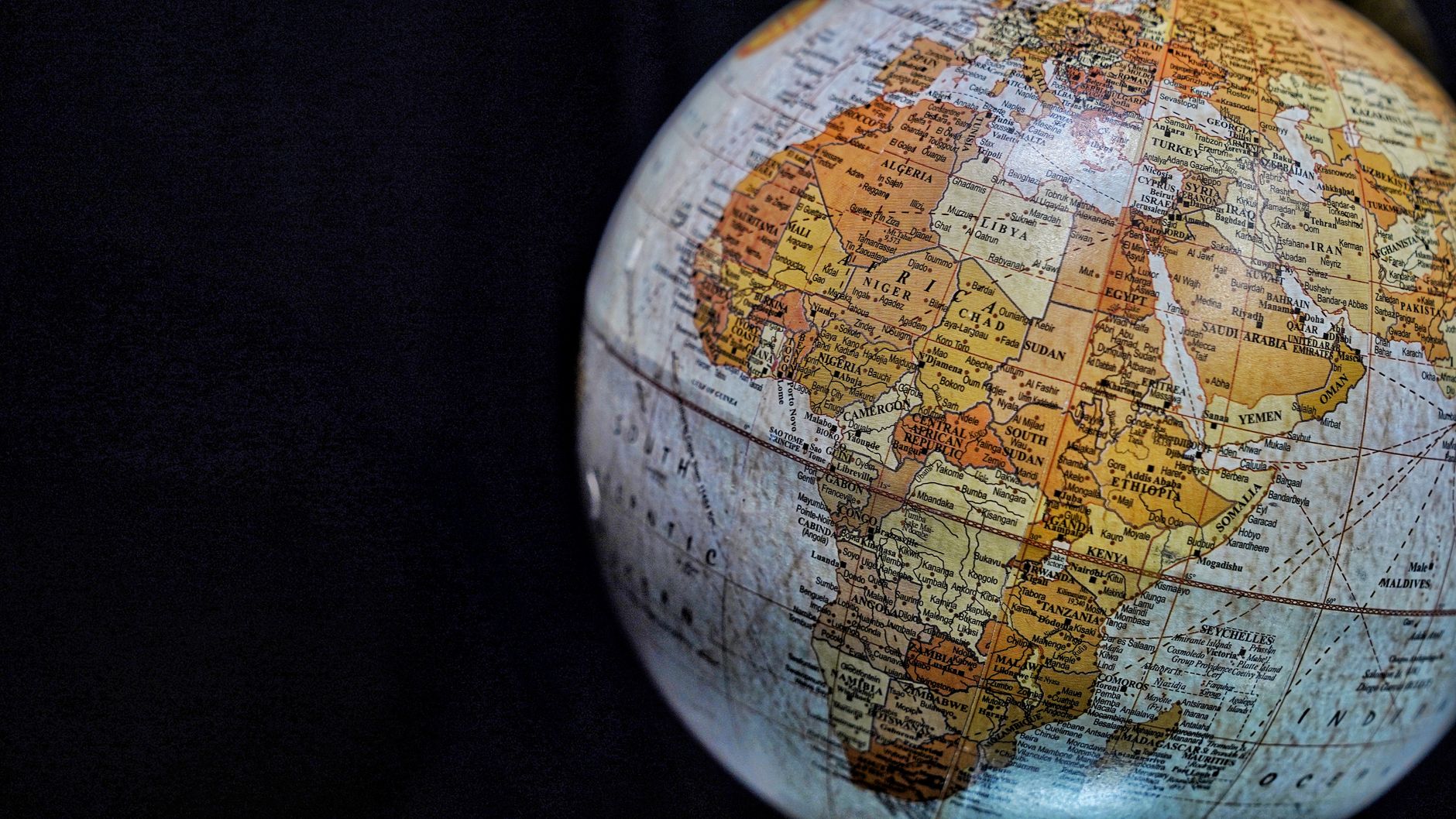
World Capitals Quiz — 15 Questions to Test Your Global Knowledge
How well do you really know the world's capitals? It's one of those geography topics that seems straightforward until you're in the hot seat. Everybody knows that Paris is the capital of France and Rome is the capital of Italy — but what about Australia? Most people instinctively say Sydney, yet the correct answer is Canberra. Or Canada? Toronto feels right, but it's actually Ottawa.
This world capitals quiz covers 15 countries across six continents, from the Americas and Europe to Asia, Africa, and the Pacific. Each question tests your knowledge of real, verified capital cities — and every answer comes with a fascinating explanation so you actually learn something new, not just whether you got it right or wrong.
No registration required. No timers. Just pure geography knowledge — pick your answer and see how you stack up. Ready to travel the world from your screen?
Fun Facts About World Capitals You Probably Didn't Know
The world's capital cities are full of surprises. Many capitals are not the largest or most famous cities in their countries — they were chosen for political, geographic, or historical reasons that are fascinating in their own right. Here are six capital city facts that will surprise even seasoned geography fans:
🇦🇺 Australia's Capital Was a Compromise
Sydney and Melbourne fought so bitterly to be Australia's capital that neither won. Canberra was purpose-built on neutral ground between them and has been the capital since 1927.
🇧🇷 Brazil Built Its Capital from Scratch
Brasília didn't exist until 1960. Built in the Brazilian cerrado in just 41 months, it replaced Rio de Janeiro and was designed in the shape of an airplane when viewed from above.
🇸🇦 South Africa Has Three Capitals
South Africa is the only country with three official capitals: Pretoria (executive), Cape Town (legislative), and Bloemfontein (judicial), reflecting its complex political history.
🌶 Nairobi Has a National Park Within the City
Nairobi, Kenya's capital, is the only capital city in the world with a national park inside its boundaries. You can watch lions and rhinos roam against a skyscraper backdrop.
🇯🇵 Tokyo Is the World's Largest Capital
Tokyo's metropolitan area is home to over 37 million people — more than the entire population of Canada. It's the world's most populous metropolitan area and capital by a wide margin.
🇰🇪 Nauru's Capital Isn't Really a City
Yaren, the de facto capital of Nauru (the world's smallest republic), isn't officially designated as the capital and has no formal city status — making it one of the quirkiest "capitals" on Earth.
The Hardest World Capitals to Remember (Top 5 Tricky Ones)
Some capital cities are famous and obvious. Others are genuinely tricky — either because a more famous city overshadows them, or because the capital is a city most people have never heard of. Here are the five world capitals that trip people up most often:
- Australia → Canberra (not Sydney): Sydney is Australia's most iconic city and its largest, but Canberra has been the capital since 1927. The confusion is so common that even well-traveled people get this one wrong.
- Canada → Ottawa (not Toronto): Toronto is Canada's largest and most internationally recognizable city, but Ottawa — a much smaller city in Ontario — is the seat of federal government.
- New Zealand → Wellington (not Auckland): Auckland has over 1.5 million residents, dwarfing Wellington's 215,000. But Wellington, at the southern tip of the North Island, is the capital.
- Brazil → Brasília (not Rio de Janeiro): Rio de Janeiro is Brazil's soul — its beaches, carnival, and Christ the Redeemer statue are world-famous. But since 1960, Brasília has been the country's capital.
- India → New Delhi (not Mumbai): Mumbai (formerly Bombay) is India's financial capital and largest city. New Delhi — a planned city within the Delhi urban area — is the national capital and seat of government.
Why Do Countries Have Capitals? The History Behind Capital Cities
Capital cities serve as the seat of government — the place where a country's political decisions are made, laws are passed, and leaders are based. But their origins are surprisingly varied:
Historical Capitals: Inherited from Empires and Kingdoms
Many capitals simply grew organically as centers of power over centuries. London, Paris, Beijing, and Tokyo became capitals because powerful dynasties and empires were based there. These cities accumulated political infrastructure, wealth, and cultural importance over hundreds of years, making them natural seats of modern government.
Planned Capitals: Built from the Ground Up
Several countries deliberately built new capital cities, usually to balance regional politics, shift development inland, or create a fresh symbolic start. Notable examples include Brasília (Brazil, 1960), Canberra (Australia, 1927), Washington D.C. (USA, founded 1790), Naypyidaw (Myanmar, 2006), and Nur-Sultan (Kazakhstan, 1997).
Contested and Divided Capitals
Some capital designations remain politically sensitive. Jerusalem is claimed as the capital by Israel, but this is not universally recognized internationally. Taiwan considers Taipei its capital, but its political status is disputed. Kosovo's capital Pristina is recognized by some nations but not others. These complexities remind us that capital city designation is as much about politics as geography.
Frequently Asked Questions About World Capitals
What is the smallest capital city in the world?
Ngerulmud, the capital of Palau in the Pacific Ocean, is widely considered the world's smallest capital city by population, with fewer than 400 residents. The government relocated to this purpose-built capital in 2006. By area, Vatican City is technically the world's smallest state, though it functions differently from a conventional capital city.
Which country has two capitals?
Several countries have multiple capitals. South Africa has three: Pretoria (executive/administrative), Cape Town (legislative), and Bloemfontein (judicial). Bolivia has two: Sucre (constitutional capital) and La Paz (seat of government). The Netherlands also has two: Amsterdam (constitutional capital) and The Hague (seat of government and parliament).
Why is Canberra the capital of Australia and not Sydney?
Canberra was chosen as a compromise between Sydney and Melbourne, both of which wanted to be the capital when Australia federated in 1901. The Australian Constitution required the capital to be in New South Wales but at least 100 miles (160 km) from Sydney. Canberra was purpose-built from scratch and became the capital in 1927.
What is the highest capital city in the world?
La Paz in Bolivia serves as the seat of government at approximately 3,640 meters (11,942 feet) above sea level, making it the world's highest seat of government. Sucre, Bolivia's constitutional capital, sits at around 2,750 meters. Quito, Ecuador's capital, sits at 2,850 meters and is the highest official constitutional capital of an independent country.
Which is the most populous capital city in the world?
Tokyo, Japan is the world's most populous capital city and metropolitan area with over 37 million people. Within city proper limits, Beijing, China, leads with approximately 21.5 million residents. Tokyo's metropolitan population exceeds the entire populations of most countries, including Canada and Australia.
Why did Brazil move its capital from Rio de Janeiro to Brasília?
Brazil moved its capital from Rio de Janeiro to Brasília in 1960 for strategic and developmental reasons. President Juscelino Kubitschek wanted to shift Brazil's population and economic activity toward its vast interior, reduce coastal concentration, and create a symbol of modernization. The entire city was built in just 41 months, earning it the nickname "The Capital of Hope."